Microbes in Human Welfare Question Answers: NCERT Class 12 Biology

Current NCERT chapter
Academic session 2026-27
2 Solutions · 0 Topics · 0 Notes resources

This chapter is part of the verified current curriculum mapping for the academic session shown below.

Chapter Details

Chapter
8 — Microbes in Human Welfare
NCERT Book
Biology
Language
English
Edition
Academic session 2026-27

Use this Class 12 Biology chapter hub to study Microbes in Human Welfare from one place. SaralStudy currently provides 2 visible NCERT solution entries on this page.

NCERT Solutions

Review the SaralStudy solution entries currently available for this chapter.

Exercise 0
A:

The large holes in the ‘Swiss Cheese’ are due to production of a large amount of CO2 by a bacterium named Propionibacterium sharmanii.  


A:

Two microbes that are Useful in biotechnology are as follows:

  1. 1. Bacillus thuringiensis is a gene isolated from this bacterium is introduced in cotton plants to make them able to kill butterfly caterpillars.
  2. E. coli is a bacterium that is used in many biotechnology producers. Their plasmid is used as vector to introduce foreign DNA segment in desired organisms.

A:

Escherichia coli strain RY 13 is the source or main organism for Eco RI.


A:

Bt cotton is a genetically modified plant that has been modified to resist attack by insect pests. E.g. cotton ball worm. These are developed by introducing a gene from Bacillus thuringiensis which produces toxin in plants which is lethal to insects.  


A:

Blue- green algae add organic matter to the soil that increase the fertility but still these are not popular as much as bio-fertilisers. This is due to several constraints which limit the application or implementation of the bio-fertilisers technology. The constraints can be environmental, technological, infrastructural, financial, unawareness, quality, marketing etc.  


A:

Roquefort cheese is formed by ripening of cheese with the fungi Penicillium roqueforti for a particular flavor.  


A:

Ganga runs from Gangotri in the Himalayas to Ganga Sagar in the Bay of Bengal. The Ganga Action Plant was a program launched in 1986, in April, in order for the reduction of pollution load in the River Ganga. The states involved in the Ganga Action Plan are – Uttaranchal, UP, Bihar, West Bengal and Jharkhand.map


A:
  1. Lipases are used in formula of detergent and are helpful in removing oily stains from the clothes.
  2. Pectinases and proteases that are used as clarifying agents in making commercial fruit and vegetable juices.

A:

Cyclosporin- A, produced by the fungus Trichoderma polysporum is used as an immunosuppressive agent in organ transplant patients.   


A:

Tobacco mosaic virus is a rod- shaped virus. This is the first plant virus to be discovered.  


A:

Methanogens, anaerobically breaks down cellulosic material to produce CO2 and H2, and are found in

  1. Anaerobic sludge in sewage treatment plants
  2. Rumen of cattles, thus providing nutrition to cattles.  

A:

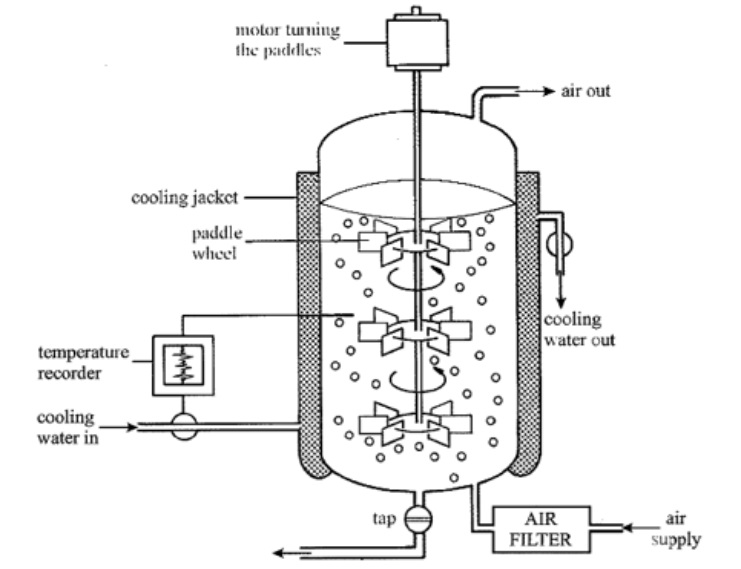
For large scale production of biotechnological products, e.g. antibiotics, beverages in industries, microbes are grown in very large vessels called fermenters or bioreactors.

fermentor


A:

Cheese is formed by partial degradation of milk by different microorganisms. Swiss cheese is formed by the bacterium Propionibacterium sharmanii. Its characteristics feature is formation of large holes due to production of large holes due to production of large amount of CO2.  


A:

Stains are bioactive molecules, produced by the yeast Monascus purpureus. These bioactive molecules have been commercialized as the blood- cholesterol lowering agents. It acts through the competitively inhabiting enzyme which is responsible for the synthesis of cholesterol.    


A:

Secondary waste water treatment is also known as biological treatment because in the breakdown of organic matter microorganisms are involved in this phase of waste water treatment.

The primary effluent is passed into the large aeration tanks where the organic matter in it is consumed by aerobic microbes which are later themselves digested by anaerobic bacteria and fungi in anaerobic sludge digesters.  


A:

Several methods of biological control are being used in the pest management to keep the pollution free environment and yield clean, non- toxic and good quality products for human consumption.

Baculoviruses are a group of viruses which is used as biological control agents that occur naturally and are specific to some insects. Most of the baculoviruses belongs to the genus Nucleopolyhedro virus. These viruses are excellent candidates for species specific, narrow spectrum insecticidal application. They have been shown to have no negative impacts on plants, mammals, bird fish or even on non- target insects.

This is specially desirable when beneficial insects are being conserved to aid in an overall Integrated Pest Management (IPM) Programme or when an ecologically sensitive area is being treated.  


A:

Antibiotics are produced by the microbes are regarded as one of the most significant discoveries of the 20th century and have greatly contributed towards the welfare of the human society.

Anti is a Gk. word that means ‘against’ and bio means ‘life’, together they mean ‘against life’, whereas with the reference to human beings, they are ‘pro life’ and not against. Antibiotics are the chemical substances that are produced by some microbes and which can kill or retard the growth of other microbes. Antibiotics have greatly improved our capacity to treat deadly diseases such as plague, whooping cough (kali khansi), diphtheria (gal ghotu), and leprosy, which had killed millions all over the globe. Today, we cannot imagine a world without antibiotics because there are various vaccines which is used to bacteria by developing the immunity through these antibiotics.   


A:

Depending on the type of the raw material used for fermentation and the type of processing (with or without distillation) different types of alcoholic drinks are obtained. Wine and beer both are produced without the distillation whereas whiskey, brandy and rum are produced by distillation of the fermented broth.

Distillation increases the alcohol content in alcoholic drinks. That is why for producing certain alcoholic drinks, distillation is required.


A:

Their common characteristics is that they produce organic acids as part of their metabolism and are therefore, used for commercial and industrial production of the same.

  1. Aspergillus niger for citric acid.
  2. Clostridium butylicum for butyric acid.
  3. Lactobacillus for lactic acid.   

A:

If our intestine harbors microbial flora exactly similar to that found in the rumen of cattle, we woeuld be able to digest the cellulose present in our foods because the microbes present in the rumen of cattle, collectively called methanogens, are capable of digesting cellulose as they have Cellulase enzyme.  


Exercise 1
A:

Curd can be used as a sample for the study of microbes. Curd contains numerous lactic acid bacteria (LAB) or Lactobacillus. These bacteria produce acids that coagulate and digest milk proteins. A small drop of curd contains millions of bacteria, which can be easily observed under a microscope.


A:

Microbes play an important role in organic farming, which is done without the use of chemical fertilizers and pesticides. Bio-fertilizers are living organisms which help increase the fertility of soil. It involves the selection of beneficial micro-organisms that help in improving plant growth through the supply of plant nutrients. Bio-fertilizers are introduced in seeds, roots, or soil to mobilize the availability of nutrients. Thus, they are extremely beneficial in enriching the soil with organic nutrients. Many species of bacteria and cyanobacteria have the ability to fix free atmospheric nitrogen. Rhizobium is a symbiotic bacteria found in the root nodules of leguminous plants. Azospirillium and Azotobocter are free living nitrogen-fixing bacteria, whereas Anabena, Nostoc andOscillitoria are examples of nitrogen-fixing cyanobacteria. Bio-fertilizers are cost effective and eco-friendly.

Microbes can also act as bio-pesticides to control insect pests in plants. An example of bio-pesticides is Bacillus thuringiensis, which produces a toxin that kills the insect pests. Dried bacterial spores are mixed in water and sprayed in agricultural fields. When larvae of insects feed on crops, these bacterial spores enter the gut of the larvae and release toxins, thereby it. Similarly,Trichoderma are free living fungi. They live in the roots of higher plants and protect them from various pathogens.

Baculoviruses is another bio-pesticide that is used as a biological control agent against insects and other arthropods.


A:

Biological oxygen demand (BOD) is the method of determining the amount of oxygen required by micro-organisms to decompose the waste present in the water supply. If the quantity of organic wastes in the water supply is high, then the number of decomposing bacteria present in the water will also be high. As a result, the BOD value will increase.

Therefore, it can be concluded that if the water supply is more polluted, then it will have a higher BOD value. Out of the above three samples, sample C is the most polluted since it has the maximum BOD value of 400 mg/L. After untreated sewage water, secondary effluent discharge from a sewage treatment plant is most polluted. Thus, sample A is secondary effluent discharge from a sewage treatment plant and has the BOD value of 20 mg/L, while sample B is river water and has the BOD value of 8 mg/L.

Hence, the correct label for each sample is:

Label

BOD value

Sample

A.

20 mg/L

Secondary effluent discharge from a sewage treatment plant

B.

8 mg/L

River water

C.

400 mg/L

Untreated sewage water


A:


Drug

Function

Microbe

1.

Cyclosporine −A

Immuno suppressive drug

Trichoderma polysporum

2.

Statin

Blood cholesterol lowering agent

Monascus purpureus


A:

(a) Single cell protein (SCP)

A single cell protein is a protein obtained from certain microbes, which forms an alternate source of proteins in animal feeds. The microbes involved in the preparation of single cell proteins are algae, yeast, or bacteria. These microbes are grown on an industrial scale to obtain the desired protein. For example, Spirulina can be grown on waste materials obtained from molasses, sewage, and animal manures. It serves as a rich supplement of dietary nutrients such as proteins, carbohydrate, fats, minerals, and vitamins. Similarly, micro-organisms such as Methylophilus and methylotrophus have a large rate of biomass production. Their growth can produce a large amount of proteins.

(b) Soil

Microbes play an important role in maintaining soil fertility. They help in the formation of nutrient-rich humus by the process of decomposition. Many species of bacteria and cyanobacteria have the ability to fix atmospheric nitrogen into usable form.Rhizobium is a symbiotic bacteria found in the root nodules of leguminous plants. Azospirillium and Azotobocter are free living nitrogen-fixing bacteria, whereas Anabena, Nostoc, and Oscillitoria are examples of nitrogen-fixing cyanobacteria.


A:

The order of arrangement of products according to their decreasing importance is:

Penicillin- Biogas − Citric acid − Curd

Penicillin is the most important product for the welfare of human society. It is an antibiotic, which is used for controlling various bacterial diseases. The second most important product is biogas. It is an eco-friendly source of energy. The next important product is citric acid, which is used as a food preservative. The least important product is curd, a food item obtained by the action oflactobacillus bacteria on milk. 

Hence, the products in the decreasing order of their importance are as follows:

Penicillin- Biogas − Citric acid − Curd


A:

Bio-fertilizers are living organisms which help in increasing the fertility of soil. It involves the selection of beneficial micro-organisms that help in improving plant growth through the supply of plant nutrients. These are introduced to seeds, roots, or soil to mobilize the availability of nutrients by their biological activity. Thus, they are extremely beneficial in enriching the soil with organic nutrients. Many species of bacteria and cyanobacteria have the ability to fix free atmospheric nitrogen. Rhizobium is a symbiotic bacteria found in the root nodules of leguminous plants. Azospirillium and Azotobocter are free living nitrogen-fixing bacteria, whereas Anabena, Nostoc, and Oscillitoria are examples of nitrogen-fixing cyanobacteria. Bio-fertilizers are cost effective and eco-friendly.


A:

The examples of bacteria that release gases during metabolism are:

(a) Bacteria and fungi carry out the process of fermentation and during this process, they release carbon dioxide. Fermentation is the process of converting a complex organic substance into a simpler substance with the action of bacteria or yeast. Fermentation of sugar produces alcohol with the release of carbon dioxide and very little energy.

Without Oxygen

(b) The dough used for making idli and dosa gives a puffed appearance. This is because of the action of bacteria which releases carbon dioxide. This CO2 released from the dough gets trapped in the dough, thereby giving it a puffed appearance.


A:

Lactic acid bacteria can be found in curd. It is this bacterium that promotes the formation of milk into curd. The bacterium multiplies and increases its number, which converts the milk into curd. They also increase the content of vitamin B12 in curd.

Lactic acid bacteria are also found in our stomach where it keeps a check on the disease-causing micro-organisms.


A:

     1.  Wheat:

Product: Bread, cake, etc.

2.      Rice:

Product: Idli, dosa

3.      Bengal gram:

Product: Dhokla, Khandvi


A:

Several micro-organisms are used for preparing medicines. Antibiotics are medicines produced by certain micro-organisms to kill other disease-causing micro-organisms. These medicines are commonly obtained from bacteria and fungi. They either kill or stop the growth of disease-causing micro-organisms. Streptomycin, tetracycline, and penicillin are common antibiotics. Penicillium notatumproduces chemical penicillin, which checks the growth of staphylococci bacteria in the body. Antibiotics are designed to destroy bacteria by weakening their cell walls. As a result of this weakening, certain immune cells such as the white blood cells enter the bacterial cell and cause cell lysis. Cell lysis is the process of destroying cells such as blood cells and bacteria.


A:

Antibiotics are medicines that are produced by certain micro-organisms to kill other disease-causing micro-organisms. These medicines are commonly obtained from bacteria and fungi.

The species of fungus used in the production of antibiotics are:


Antibiotic

Fungus source

1.

Penicillin

Penicillium notatum

2.

Cephalosporin

Cephalosporium acremonium


A:

Sewage is the municipal waste matter that is carried away in sewers and drains. It includes both liquid and solid wastes, rich in organic matter and microbes. Many of these microbes are pathogenic and can cause several water- borne diseases. Sewage water is a major cause of polluting drinking water. Hence, it is essential that sewage water is properly collected, treated, and disposed.


A:


Primary sewage treatment


Secondary sewage treatment

1.

It is a mechanical process involving the removal of coarse solid materials.

1.

It is a biological process involving the action of microbes.

2.

It is inexpensive and relatively less complicated.

2.

It is a very expensive and complicated process.


A:

Yes, microbes can be used as a source of energy. Bacteria such as Methane bacterium is used for the generation of gobar gas or biogas.

The generation of biogas is an anaerobic process in a biogas plant, which consists of a concrete tank (10−15 feet deep) with sufficient outlets and inlets. The dung is mixed with water to form the slurry and thrown into the tank. The digester of the tank is filled with numerous anaerobic methane-producing bacteria, which produce biogas from the slurry. Biogas can be removed through the pipe which is then used as a source of energy, while the spent slurry is removed from the outlet and is used as a fertilizer.


NCERT Textbook PDF

Use the available NCERT textbook PDF alongside the chapter solutions.

NCERT Exemplar

Use the mapped NCERT Exemplar resource for additional chapter practice.

Current Exemplar

Removed / Changed Chapters from the Syllabus

Current and historical curriculum records are shown separately so removed material is not mixed into current practice.

Previous / Removed Chapters

  • Chapter 1: Reproduction in Organisms (rationalised)
  • Chapter 9: Strategies for Enhancement in Food Production (rationalised)
  • Chapter 16: Environmental Issues (rationalised)

Frequently Asked Questions about Microbes in Human Welfare - Class 12 Biology

    • 1. Is Microbes in Human Welfare in the current curriculum?
    • This chapter is part of the verified current curriculum mapping for the academic session shown below. Verified academic session: 2026-27.
    • 2. How many NCERT solution entries are currently available for Microbes in Human Welfare?
    • SaralStudy currently shows 2 visible solution entries on this chapter page.
    • 3. Are topic mappings available for Microbes in Human Welfare?
    • No public topic mappings are currently available for this chapter.
    • 4. Are revision notes available for Microbes in Human Welfare?
    • No verified chapter notes are currently available in this hub.

Latest Blog Posts

Stay updated with our latest educational content and study tips

How to Return to Work After a Career Break: Skills, Jobs and Preparation in 2026

It’s not about starting over if you took a break to care for children, take care of yourself, be healthy or for any other reason. This is a realistic strategy for the recovery of skills, selection of the right job, and overcoming the resume problem. One year, three years or 10 years of a career … Read more

Read More

Best Career Options After Class 12 for Average Students in 2026

There’s no need to score 95% or achieve a JEE/NEET rank. You don’t need to score 95% or rank in JEE/NEET to build a solid career. A candid and pragmatic guide to the routes that actually work for students who have an average mark and what to do when faced with the options. ​ If … Read more

Read More

Coaching vs Self-Study: Which is Best in 2026 for Competitive Exams?

AI tools, online platforms that are much cheaper than coaching centres and the changing idea of what “structure” even means have upended this argument more in the past two years than in the decade preceding it. Here’s what is really the case for 2026 – and what has actually stayed the same. If you look … Read more

Read More

Career Change After 30: How to Transition from Non-Tech to IT or Data Science

Starting to make a new career after 30 isn’t a start from scratch. Marketing, teaching, financial, retail, healthcare, sales and other professionals can pursue careers in technology by applying the existing knowledge and skills they have acquired to new technology skills. There are various ways to enter the technology industry, such as in IT support, … Read more

Read More

Benefits of Using Our NCERT Solutions for Class 12 Biology

When it comes to excelling in your studies, having a well-structured study guide can make a huge difference. Our NCERT Solutions for Class 12 Biology provide you with a comprehensive, easy-to-understand, and exam-focused resource that is specifically tailored to help you maximize your potential. Here are some of the key benefits of using our NCERT solutions for effective learning and high scores:

NCERT Solutions for Effective Exam Preparation

Preparing for exams requires more than just reading through textbooks. It demands a structured approach to understanding concepts, solving problems, and revising thoroughly. Here’s how our NCERT solutions can enhance your exam preparation:

  • Clear Understanding of Concepts: Our NCERT solutions are designed to break down complex topics into simple, understandable language, making it easier for students to grasp essential concepts in Biology. This helps in building a solid foundation for each chapter, which is crucial for scoring high marks.
  • Step-by-Step Solutions: Each solution is presented in a detailed, step-by-step manner. This approach not only helps you understand how to reach the answer but also equips you with the right techniques to tackle similar questions in exams.
  • Access to Important Questions: We provide a curated list of important questions and commonly asked questions in exams. By practicing these questions, you can familiarize yourself with the types of problems that are likely to appear in the exams and gain confidence in answering them.
  • Quick Revision Tool: Our NCERT solutions serve as an excellent tool for last-minute revision. The solutions cover all key points, definitions, and explanations, ensuring that you have everything you need to quickly review before exams.

Importance of Structured Answers for Scoring Higher Marks

In exams, it's not just about getting the right answer—it's also about presenting it in a well-structured and logical way. Our NCERT solutions for Class 12 Biology are designed to guide you on how to write answers that are organized and effective for scoring high marks.

  • Precise and Concise Answers: Our solutions are crafted to provide answers that are to the point, without unnecessary elaboration. This ensures that you don't waste time during exams and focus on delivering accurate answers that examiners appreciate.
  • Step-Wise Marks Distribution: We understand that exams often allot marks based on specific steps or points. Our NCERT solutions break down each answer into structured steps to ensure you cover all essential points required for full marks.
  • Improved Presentation Skills: By following the format of our NCERT solutions, you learn how to present your answers in a systematic and logical manner. This helps in making your answers easy to read and allows the examiner to quickly identify key points, resulting in better scores.
  • Alignment with NCERT Guidelines: Since exams are often set in alignment with NCERT guidelines, our solutions are tailored to follow the exact format and language that is expected in exams. This can improve your chances of scoring higher by meeting the examiner's expectations.
Keep learning

Discover More on SaralStudy

Explore all articles